
Wandering Bee Farm
Catnip
Catnip
Couldn't load pickup availability
Dried Catnip (Nepeta cataria)
Pungent, earthy, and deeply calming, our Dried Catnip is a wonderfully versatile herb with a long and trusted history in traditional wellness practice — one that extends far beyond its well-known reputation with our feline friends.
About the Herb
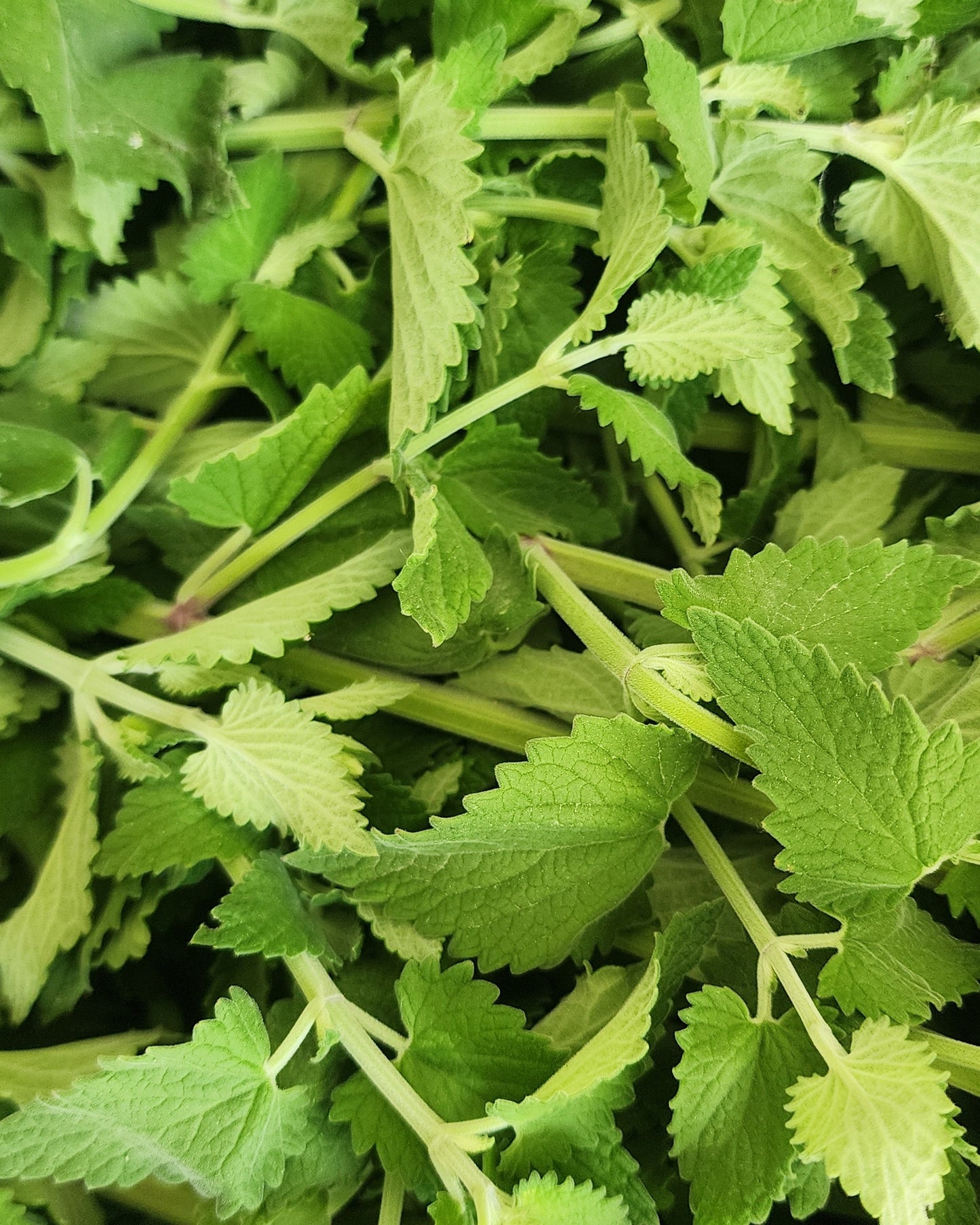
Catnip (Nepeta cataria) is a tall, vigorous perennial in the mint family, native to Europe and Asia and now widely naturalized across North America. Distinguished by its large, heart-shaped leaves, soft downy texture, and clusters of small white blossoms, it is a striking and abundantly productive herb with a characteristically bold, pungent aroma that is earthy, slightly minty, and unmistakably its own. While catnip is perhaps most famous for its euphoric effect on cats, it has been a valued medicinal herb in human wellness traditions for centuries, appearing in European folk medicine as far back as the 15th century as a reliable remedy for sleep, stress, and digestive discomfort. Our catnip is grown using organic practices, with no synthetic pesticides or fertilizers, harvested at peak bloom when its volatile oil content is at its highest, and carefully dried at low temperatures to preserve its potent aroma and full spectrum of beneficial compounds.
Benefits
Catnip is one of the most trusted calming and sleep-supportive herbs in the Western herbal tradition. Its high concentration of nepetalactone, the same volatile compound responsible for its effect on cats, has a remarkably different action in humans, producing a gentle sedative and nervine effect that quiets the mind, eases tension, and supports restful, natural sleep. Traditional European herbalists relied on catnip as a go-to remedy for occasional sleeplessness, and it remains one of the most recommended herbs for those seeking gentle, non-habit-forming support for a healthy sleep cycle. Its calming action on the nervous system also makes it a valued ally for easing everyday stress and anxiety, promoting a sense of ease and groundedness during periods of tension or overwhelm.
As a digestive herb, catnip has a well-established and long-standing reputation in European folk medicine. Its antispasmodic and carminative properties work to relax smooth muscle tissue in the digestive tract, easing occasional cramping, bloating, gas, and digestive discomfort with a gentle and reliable action that has made it a household remedy across generations. Traditional herbalists particularly valued catnip for stress-related digestive upset, where its dual action on both the nervous system and the digestive tract makes it uniquely well-suited.
Catnip also carries a meaningful tradition as a diaphoretic and fever-supportive herb. Like elderflower and yarrow, it has long been used in both European and Native American traditions to support the body's natural fever response by encouraging healthy perspiration and promoting circulation. Its gentle, reliable action made it a particularly favored herb for supporting children through colds and fevers in traditional practice, where its safety profile and mild action were especially valued.
Rich in nepetalactone, iridoid glycosides, flavonoids, and tannins, catnip brings meaningful antioxidant and anti-inflammatory support alongside its better-known nervine and digestive properties. It is a true multi-system herb, gentle in action yet broad in application, and a wonderfully underappreciated addition to any serious herbal pantry.
Quality & Sourcing
- Grown with organic practices, no synthetic pesticides or fertilizers
- Non-GMO
- No additives, fillers, or preservatives
- Small-batch dried to preserve potency and aroma
How to Use
Steep 1 to 2 teaspoons in 8 oz of hot water for 10 to 15 minutes for a mildly earthy, aromatic herbal tea. Particularly well-suited as an evening tea for winding down before bed. Also well-suited for tinctures, herbal capsules, and custom botanical blends. And yes, your cats will love it too.
These statements have not been evaluated by the Food and Drug Administration. This product is not intended to diagnose, treat, cure, or prevent any disease.